

We at the Rights and Resources Group (RRG) know that the events of the past weeks and the murders of Ahmaud Arbery, George Floyd, and Breonna Taylor by police officers are only a snapshot of the white supremacy that underlies widespread injustice against Black lives.

In Mangkit Village, North of Sulawesi in Indonesia, land was returned to farming families, ending a long struggle between the community and a plantation company. This has crucial implications for the communities’ livelihoods and very survival.
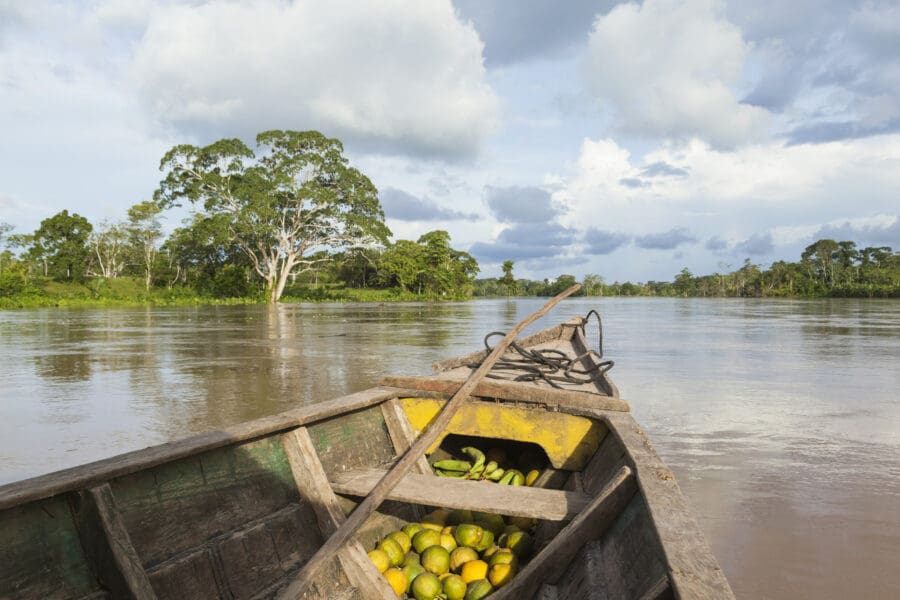
We already know the solution to climate change: reduce emissions and protect forests. And luckily, there is a group of experts who are uniquely suited to manage, protect, and restore the world’s forests: Indigenous Peoples and local communities.

The recent IPCC report was the first to recognize the critical importance of securing indigenous and community land rights as a climate solution.
RRI’s Strategic Analysis and Global Engagement Director Alain Frechette discusses the evidence behind this finding.

At the most recent Women Deliver conference—the world’s largest gathering on gender equality and the wellbeing of girls and women—experts from across the RRI Coalition had the opportunity to learn from diverse leaders around the world, while also raising awareness of the urgent need to recognize the rights of indigenous, rural, and community women. Here’s what participants said international audiences need to know about the challenges and opportunities facing this unique subset of women.

The GLF summit presented the first draft of a ‘gold standard’ on rights, which will define the principles of secure and proper rights to be applied by public, private and non-profit actors in the implementation of policies, business and initiatives in global landscape. “We wish to establish that the respect of our rights is non-negotiable,” said Joan Carlin of the Indigenous Peoples Major Group for Sustainable Development (IPMG), which leads the initiative together with the Rights and Resources Initiative (RRI).

Representatives from 13 governmental land agencies in Africa announced today in Antananarivo, Madagascar the launching of the Network of African Land Institutions for Community Land Rights (ALIN) to serve as a platform for exchange and mutual support to advance opportunities to secure indigenous and community land rights across the region.

RRI is thrilled to be participating in the Women Deliver Conference, the world’s largest conference on gender equality and the well-being of girls and women.

Recognizing and securing women’s land and resource rights—in law and practice—benefits women, their communities, and their countries. Strong governance rights for women underpin their ability to participate in decision-making affecting their personal agency and economic security, their children’s future, and the future of the planet. Just a handful of stories from the RRI Coalition demonstrate how, across the world, indigenous and rural women are fighting for their land and resource rights, and using their traditional knowledge and leadership to contribute to myriad global development goals.

The Doi Tung Development Project, run by the Mae Fah Luang Foundation under Thai royal patronage, is held up by the United Nations as a model for ending narcotic drug cultivation and improving the lives of indigenous communities. Yet in other parts of the country, indigenous people continue to live in poverty and face challenges in accessing land, livelihoods and citizenship, according to tribal rights groups.

Washington DC-based Rights and Resources Initiative has done a wonderful job of collating dozens of studies that show that indigenous people and other forest-dependent groups have been effective stewards of forests and biodiversity in hundreds of sites throughout the world.

The RRI is a global network advocating for the land and forest rights of Indigenous peoples and local communities. As the RRI’s coordinator, Andy White travels the world, meeting with Indigenous and community leaders, governments and civil society organizations to discuss how local communities’ rights to the forest can be advanced. Here, as part of an ongoing review of community rights to forested lands and key conditions for success led by Tropenbos International, he talks about recent progress and challenges and the role that civil society organizations can play to help people claim their rights as a step toward locally-led sustainable development.

“They started the project by taking away communities’ land without their consent, using intimidation and all kinds of misplaced government power to evict them from their own customary land,” said Kipalu, who now works for the Rights and Resources Initiative in Washington, D.C.

Recognition of the role local and indigenous communities have in stewarding forests continued to grow in 2018. More reports and studies argued that securing indigenous peoples’ land rights is one of the most cost-effective mechanisms for protecting forests and mitigating climate change. Accordingly, philanthropic attention and dollars shifted toward such efforts, including a pledge by group of 17 philanthropic foundations at the Global Climate Action Summit to support recognition of indigenous peoples’ and traditional communities’ collective land rights and resource management as part of their land-based climate change mitigation programs. A study co-authored by UN Special Rapporteur on the rights of indigenous peoples and the Rights and Resources Initiative (RRI) even put a dollar figure on the labor and cash indigenous peoples invest in forest conservation efforts, estimating the annual contributions of such “Forest Guardians” at $1.7 billion.

Indigenous people in Ecuador say their territorial rights are being systematically violated, according to a top United Nations official. Victoria Tauli-Corpuz, the U.N.’s special rapporteur on the rights of indigenous peoples, is urging the Ecuadoran government to form a “truly plurinational and multicultural society” in accordance with its constitution and international law.
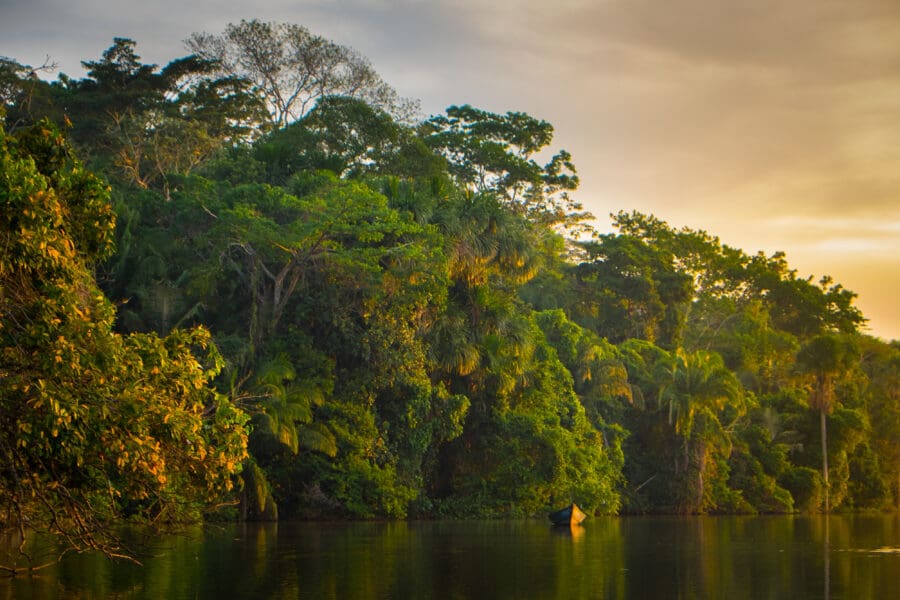
As world leaders gather in Poland this week to hold a critical dialogue on the UN Framework Convention on Climate Change (UNFCCC), the world’s tropical forests ought to take center stage. The ambitious pledge of the Paris Agreement will be virtually unattainable if the world’s remaining tropical forests are not safeguarded.

On September 19, Liberian President George Manneh Weah signed into law the Land Rights Bill (LRB), a landmark piece of legislation that recognizes the rights of Indigenous Peoples and local communities to their customary lands and gives customary land the same standing as private land in Liberia. This historic victory sets a precedent for land rights recognition in West Africa and can serve as a model for the region and beyond.

The world is turning its eyes toward Colombia as the new president, Iván Duque, takes office. Rights groups and peace activists are calling on the government to ensure that both the peace process and the country’s social leaders are protected.

Recent research by the Rights and Resources Initiative demonstrated that the DRC’s first REDD+ initiatives in Mai-Ndombe province do not adequately respect the rights of local peoples. What is more, they are actually failing to protect their forests.

The 15th Free Land Camp (Terra Livre, or ATL for its Portuguese acronym) brought 3,000 Indigenous Peoples and their allies together from all regions of the country at a massive encampment in Brasilia to call for justice for indigenous communities. Participants used the gathering—one of the largest ever—to create and present a unified political agenda before the Brazilian government.
Civil society organizations and communities affected by oil palm concessions across Liberia have grouped themselves in addressing urgent issues in the oil palm sector, demanding more access to mechanisms that can make concessionaires more accountable in line with laws and regulations.
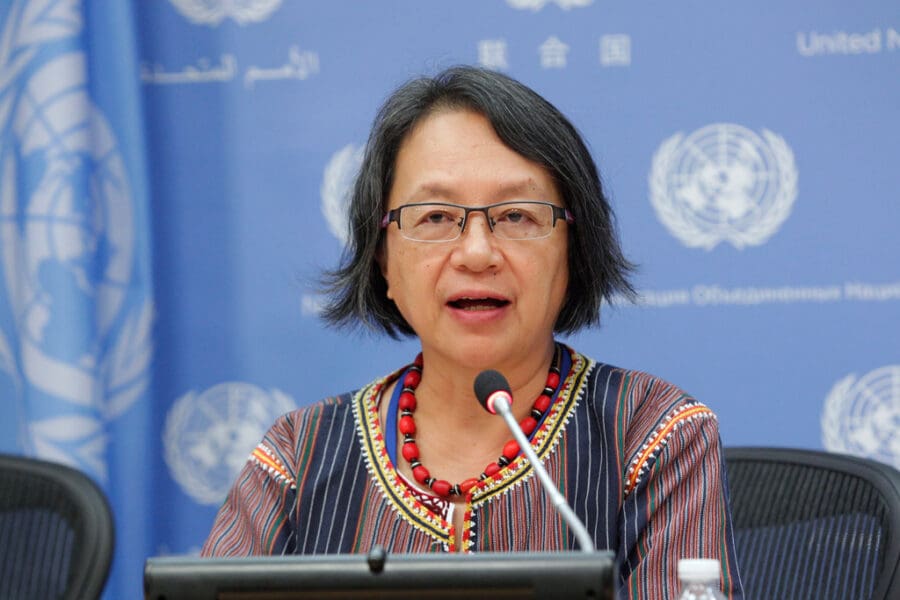
The theme of this year’s UN Permanent Forum on Indigenous Issues was “Indigenous Peoples’ collective rights to lands, territories, and resources.” Indigenous leaders from across the globe noted the crucial role that secure rights play in their lives and livelihoods, and in the advancement of sustainable development and climate change mitigation.
Pressures from climate change have worsened poverty, food insecurity, human trafficking, and child marriage, activists argue. For a long time, says Ms. Bandiaky-Badji, people have focused on rural and indigenous women “as victims.”
Land rights is emerging as a big issue in the UN’s REDD+ programme to reduce deforestation, with concern focused on a tract of 9.8 million forested hectares in the Mai-Ndombe province in the Democratic Republic of the Congo (DRC).