

Recognizing secure tenure rights for local communities and Indigenous Peoples is one of the key drivers of social peace and sustainable economic development. Addressing the common need for a platform to continue sharing experiences and knowledge, we helped establish the African Land Institutions Network for Community Rights (ALIN). To assess progress since meeting in Antananarivo, Madagascar in 2019, the 3rd ALIN Conference will be held in a hybrid format in Lomé, Togo and online from October 12-14, 2021.

A high-level discussion convened by RRI and the FCDO, UK sought to address the ownership gap in collective land rights to tackle climate change and biodiversity loss.

To the west of Great Slave Lake, the second-largest lake in Canada’s Northwest Territories, is a plateau that towers 600 meters above the surrounding Mackenzie Valley. The plateau, which features a unique mosaic of boreal forest, wetlands, and lakes, and is home to dozens of at-risk species, including the woodland caribou, wood bison, and waterfowl, is known as the Edéhzhíe Dehcho Protected Area/National Wildlife Area (pronounced eh-day-shae.)

Secure rights to land are fundamental to enable Indigenous Peoples, and in particular, Indigenous women, to continue their effective stewardship of forests.

This analysis shows that the vast majority of tropical forested countries seeking to benefit from international forest carbon markets have yet to define in law and in practice the rights of Indigenous Peoples, local communities, and Afro-descendant Peoples over carbon in their customary lands and territories.

RRI Partners and Collaborators launch initiative to help Nepal cope with devastating COVID-19 crisis.

Andy White (RRI), Gam Shimray (AIPP), and Samuel Nguiffo (CED Cameroun), send a letter on behalf of the RRI Coalition to Marco Lambertini, Director General of WWF International. The letter is a follow-up to an RRI meeting with Mr. Lambertini and his team, held on February 6, 2021.

Blood in the jungle, we demand justice.

RRI collaborator KVCO help formalize a mediation process between local communities and oil companies in Kerio Valley, enshrining community land rights.

Não há empoderamento político sem empoderamento econômico. Esse foi o princípio por trás de uma estratégia de 2019 da Coalizão da América Latina da RRI [Iniciativa de Direitos e Recursos] para analisar sistemas econômicos com base nos próprios conceitos de desenvolvimento das comunidades dentro de seus sistemas de propriedade comum.

The fires in Similipal National Park and Tiger Reserve have brought to the fore the tug of war between the forest department and the community for biosphere ownership.

Thailand’s legal frameworks for biodiversity conservation and international climate commitments omit the important role that its Indigenous Peoples play as stewards of the environment.

Across the world, the outbreak of COVID-19 has created unprecedented challenges for RRI members and their communities. In many cases though, it has also led to opportunities for empowering local communities. This was the case for Social Entrepreneurs for Sustainable Development (SESDev), a Liberian non-profit that works on natural resource governance rights.
There is no political empowerment without economic empowerment. That was the principle behind a 2019 strategy by RRI’s Latin America coalition to analyze economic systems based on communities' own concepts of development within their collective tenure systems.

The Amazon’s peoples and representative organizations, threatened by the ongoing pandemic, are calling upon supporters across the world to join their fight to protect the Amazonian territories from this crisis. The virtual gathering, "The Jungle Screams: Voices of the Amazon," will analyze and build proposals to fight Covid-19, climate change, patriarchy, gender-based violence, and political systems that hijack democracy. This event is open to participation.

As rising pollution levels, accelerating climate change, and population growth accumulate pressure on the world’s freshwater resources, there has never been a greater need to legally secure the freshwater rights of the Indigenous peoples and local communities who claim and steward over half of the world’s land — including vital watersheds that sustain healthy aquatic and terrestrial ecosystems.
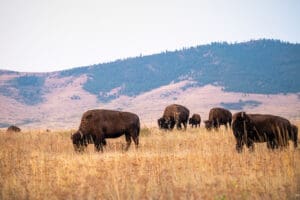
After decades of battling misinformation, the Confederated Salish and Kootenai Tribes recover their lands and the herd.

Federal legislation enacted at the end of 2020 clears up longstanding tribal claims over water rights in Montana and provides the Confederated Salish and Kootenai Tribes with a historic $1.9 billion windfall.

In May 2017, Kenya’s Ogiek people, a hunting and gathering community, won a landmark victory before the African Court on Human and Peoples’ Rights after…

Africa is currently experiencing what can be called its “third great land transformation.” This follows the first one inaugurated by colonial powers, and a second one launched by postcolonial states for developmental and infrastructural purposes. The 21st century wave of land grabs, which has exploded in recent years, constitutes the third.

With surging international, national, and sub-national policy attention to land tenure security (LTS) in developing countries in recent years, it is timely to ask: What have been the effects of thousands of efforts to improve it in dozens of developing countries? To date, almost all efforts to answer this question have been relatively small-scale, discrete studies within the boundaries of a single country.

A new study from RRI documents the multidimensional impacts and multiplier effects of collective rights violations by extractive industries and infrastructure development in Latin America. The study tracks 102 cases involving Indigenous Peoples, Afro-descendants, and local communities.

Damaging the Forest, Harming People - Negative impacts of the illegal timber trade between Cameroon and Vietnam

We depend on and are part of nature. Our life-giving water, the air we breathe is cleansed and revitalised, the food we eat comes from a living soil. Many of our health cures have origins in nature and our education and spiritual sustenance requires exposure to nature. Edmund Barrow FRSA argues our current economic and development paradigms fail to recognise this which requires a shift from being ‘tourists’ to pilgrims when it comes to our place on Earth.